Buying the best monitor for Fortnite is vital due to the game’s fast-paced gameplay and vibrant colors at every corner of the map. Buying an underpowered display can put you at a disadvantage to other gamers who can more precisely aim and react with faster gaming monitors, plus the game won’t look as good without excellent color performance.
Our guide to the best gaming monitor for Fortnite can help you find the perfect monitor for your setup. Below, we cover our top Fortnite monitor picks, provide several essential buying tips, and discuss the monitors Fortnite pros use to rack up wins.
What monitor brand do Fortnite pros use?
Alienware and Asus gaming monitors are the brands predominantly used by pro Fortnite players. We detail below a breakdown of monitor brands used by Fortnite pros to highlight the most popular monitors the best players use.
Best monitor for Fortnite
Gaming monitors with 1440p resolutions and 360Hz refresh rates are a relatively new category of entrants, and the Asus ROG Swift PG27AQN is among the leaders in that pack. This is the gaming monitor to put on your shortlist if you’re a gamer that demands the best.
First, such a high refresh rate and resolution are for naught if a gaming monitor doesn’t have the right specs for the smoothest gameplay, which is where the Asus ROG Swift PG27AQN shines. This gaming monitor boasts an incredibly low input lag of 1.0 milliseconds. You’ll also get an included NVIDIA G-Sync processor. Combine these specs, and you get a crisp gaming monitor with outstanding motion clarity and a tear-free gaming experience, great for accurately tracking and aiming in Fortnite.
The Asus ROG Swift PG27AQN also has excellent image quality, something that competing esports-grade gaming monitors can’t proclaim. The 27-inch IPS panel has deep blacks and rich colors in vibrant games thanks to its 1000:1 contrast ratio, 98% DCI-P3 color coverage, and DisplayHDR 600 certification. Besides the contrast ratio, the other specs outperform many other premium gaming monitors, resulting in fantastic image quality for a gaming monitor that perfectly complements the lightning-fast performance and motion clarity. This isn’t the ideal monitor for content creation, but it outperforms other similarly-priced IPS panel models.
Lastly for the features, you’ll get excellent ergonomics and several gaming-focused features. The Asus ROG Swift PG27AQN’s height can be adjusted by up to 100mm, and it includes tilt, swivel, and pivot functionalities to help you find the best viewing angle. The included GamePlus, GameVisual, and NVIDIA Reflex Analyzer features are great for gamers who like to nerd out on settings, though these features may not be useful for casuals.
Admittedly, it’s hard to find many downsides to the Asus ROG Swift PG27AQN. It isn’t cheap, which is one consideration. Plus, it doesn’t include convenient desk setup features such as a KVM switch or USB-C ports.
But if those things don’t bother you, you’ll be hard-pressed to find a gaming monitor with great performance and image quality. Many excel at one and not the other.
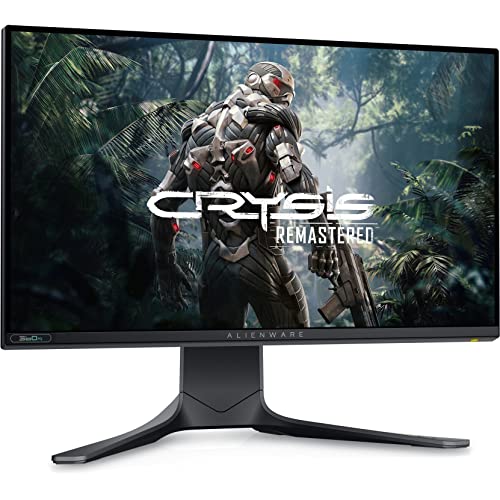
While the Asus ROG Swift PG27AQN is exceptional, it’s worth considering the Alienware AW2723DF if you’re looking for the best 244Hz monitor for Fortnite. The two go toe-to-toe in many areas, but the Alienware model is cheaper for a few reasons that may or may not matter to you.
The Alienware AW2723DF is a 1440p IPS gaming monitor with a 1.0 millisecond response time, just like the Asus model. But you’ll get a lower refresh rate with the Alienware AW2723DF. While the refresh rate can be overclocked to 280Hz, the motion clarity and gameplay smoothness are excellent.
But let’s get real for a moment. Only a small segment of gamers will notice the difference between a 240Hz and 360Hz refresh rate. Perhaps fewer can take advantage of the performance difference due to their expertise in a game or the limitations of their PC. Jumping down slightly for the refresh rate and lower price is a smart call for most casual gamers.
Nicely, the Alienware AW2723DF performs well for a gaming monitor regarding color performance. It has good DCI-P3 and sRGB color coverage, plus it’s rated for up to 600 nits of peak brightness with the DisplayHDR certification.
One differentiating design factor is that the Alienware AW2723DF has exceptional display area coverage of 93.20%, resulting in comparatively thin bezels you notice when viewing this gaming monitor.
The LG 27GR95QE-B is a stunning gaming monitor on the bleeding edge. This is the first OLED 1440p gaming monitor with a 240Hz refresh rate. LG also packed in an insanely low 0.03 millisecond response time for some extra dust off their shoulders.
With these performance specs, it’s not surprising that the LG 27GR95QE-B stands out. Let’s explore why.
As you know by now, a monitor with a 1440p resolution and a 240Hz refresh rate isn’t unheard of. That’s the sweet spot of the market where there’s the best performance for the price.
But those two specs are unheard of for OLED gaming monitors, which far outperform IPS, TN, and VA panels regarding color performance. In short, OLED panels don’t have a backlight, which other panels need to render any color, including blacks.
As a result, the LG 27GR95QE-B’s OLED panel is capable of a nearly infinite contrast ratio, creating perfect blacks and rich, vibrant colors, perfect for Fortnite.
The LG 27GR95QE-B also stands out with its overall design and build quality. The stand is sturdy and fully ergonomic for height adjustments, tilt, swivel, and pivot functionality. The bezels are impressively thin with 94.84% display area coverage. Many high-end gaming monitors have lower coverage in the high 80s to low 90s percentage-wise.
Lastly, the LG 27GR95QE-B is a good option if you game on a PS5 or Xbox Series X. Two HDMI 2.1 ports are included, providing the required bandwidth to run games at 4K and 120 frames per second. The LG 27GR95QE-B isn’t a 4K gaming monitor, but downscaling the resolution on the impressive OLED panel provides a color-rich image.
The Alienware AW2521H is the best 25-inch monitor for Fortnite, and it packs esports-grade performance with a 360Hz refresh rate. As with most esports-grade monitors, you won’t get the highest resolution: The Alienware AW2521H is a 1080p monitor.
But what you get with this model is better color performance, great if you covet all the performance goodies of an esports monitor but want something more capable outside of first-person shooter titles.
The Alienware AW2521H’s IPS panel produces better colors than a TN panel, which is the panel type included in our other small-screen pick, the BenQ Zowie XL2546K. You’ll also get wider viewing angles.
Another feature that adds versatility compared to the BenQ XL2546K is that the Alienware model has 4 USB ports, including one with power delivery.
Both are exceptional 1080p gaming monitors for esports enthusiasts. But you’re likely best to choose the Alienware AW2521H if you want the best of both worlds, esports performance and better colors.
The Gigabyte M27Q is the best budget monitor for Fortnite with a 1440p resolution. It’s not even close when reviewing the market of 27-inch gaming monitors and comparing the features offered (or lack thereof) by other brands for the price.
Impressively, the Gigabyte M27Q’s fluid gameplay and motion clarity are on par with models twice as expensive. This monitor even beats several of our premium picks regarding response time at 0.5 milliseconds. So, you’ll get an equally high-performing display with exceptionally low input lag.
The Gigabyte M27Q also includes additional features suitable for single-monitor and laptop-based setups. There is a USB-C port with 15 watts of power delivery and a KVM switch, which is convenient if you want to use a single mouse and keyboard across two devices.
The Gigabyte M27Q has room for improvement with the stand’s ergonomics. There is 130mm of height adjustment and tilt functionality but no swivel or pivot option.
This design approach makes sense when considering how Gigabyte made a name for itself in the budget category. Its monitors are strategically designed to deliver on the most common needs, and it sacrifices in other less important areas. The essential height and tilt stand ergonomics are available, but most budget gamers don’t need swivel or pivot functionality to run a single monitor setup.
The Asus VG279QM is the best cheap monitor for Fortnite with a 1080p resolution. Like our budget Gigabyte pick, this 27-inch Asus model sprints ahead of the pack.
The most impressive feature for smooth gameplay is the 240Hz refresh rate that is overclockable to 280Hz. A low response time, competitively high peak brightness, and G-Sync and FreeSync support are also included. These are all the building blocks for a fast gaming monitor with excellent blur reduction in Fortnite.
Of course, you won’t get image quality and colors on par with higher-end displays, such as VA and OLED panels. But that’s not the primary focus, especially knowing this is a 1080p gaming monitor. The high refresh rate, not a higher resolution, grants a competitive edge in movement, tracking, and aiming.
The primary drawback is that the Asus VG279QM has poor port options without USB options for your peripherals. But Asus partly makes up for this with the stand’s ergonomics, which have full height adjustment, tilt, swivel, and pivot functionality. These versatile ergonomics are rare in the budget category.
Fortnite monitor buying tips
To get the best bang for your buck, it’s important to focus on a few essentials when buying a new monitor for Fortnite.
Refresh rate
Refresh rate refers to the number of times the image refreshes on screen per second. The higher the refresh rate, the smoother the gameplay and the potential competitive advantages. 240Hz refresh rates are the sweet spot for the best price-to-performance.
If your budget can’t support a 240Hz gaming monitor, stick to 144Hz or higher. You’ll still get excellent performance at this level. There is also more of a noticeable difference between upgrading to 144Hz than going from 144Hz to 240Hz or even 240Hz to 360Hz refresh rates.
Resolution
There isn’t a competitive advantage to gaming at 1440p or 4K instead of 1080p, but it’s hard to ignore how much better the experience is in Fortnite at higher resolutions. We suggest buying a 1440p gaming monitor for Fortnite if your budget can support it. This resolution results in great visuals in Fortnite’s vibrant landscapes.
Panel type
IPS panels are the most popular for gaming in general and Fortnite. IPS displays offer outstanding performance and visual performance for the price.
VA displays have higher contrast ratios than IPS panels, which is excellent for Fortnite’s vibrant colors. But VA panels are mostly reserved for curved gaming monitors.
TN panels are popular with esports athletes for their high refresh rates and outstanding motion handling. But the visuals can’t compete with IPS, VA, and OLED panels with better contrast ratios and colors.
Lastly, OLED panels are becoming more popular due to their perfect blacks and rich color performance. But OLED panels are expensive when matching the equivalent specs of other panel types.
Size
If you want a dedicated gaming monitor, 27 inches is the best monitor size for Fortnite. A 25-inch display can save money in certain situations, but smaller displays are less immersive. There are also fewer options to choose from.
Jumping up in monitor size increases the price tag. Still, it is an excellent option for a more immersive gaming experience or a gaming monitor to pull double duty for gaming and productivity. Nicely, Fortnite has ultrawide support for monitors with a 21:9 aspect ratio.
Console compatibility
It’s vital to pay attention to the I/O ports included if you have a PS5 or an Xbox Series X. If this sounds like you, it’s best first to find a gaming monitor that includes an HDMI 2.1 port. You may also want to jump to a 4K resolution.
This way, you can run Fortnite at 4K resolution and 120 frames per second. HDMI 2.0 and HDMI 1.4 ports don’t have the bandwidth to run Fortnite at the highest resolutions and refresh rates available on the newest-gen consoles. HDMI 2.0 is limited to 240Hz at 1080p, 144Hz at 1440p, and 60 Hz at 4K.
Comparing the best Fortnite monitors
It can be helpful to compare our Fortnite monitor picks to find the best model for your needs. We cover some essential features below to simplify your buying experience.
Display
| Model | Resolution | Size | Panel | Contrast Ratio | Peak Brightness | DCI-P3 Coverage |
|---|
| Asus PG27AQN | 1440p | 27” | IPS | 1000:1 | 600 nits | 98.0% |
| Alienware AW2723DF | 1440p | 27” | IPS | 1000:1 | 600 nits | 95.0% |
| BenQ Zowie XL2546K | 1080p | 24.5” | TN | 1000:1 | 320 nits | Not advertised |
| LG 27GR95QE-B | 1440p | 27” | OLED | 1500000:1 | 1000 nits | 98.5% |
| Gigabyte M28U | 4K | 28” | IPS | 1000:1 | 300 nits | 94.0% |
| Gigabyte M34WQ | 1440p | 34” | IPS | 1000:1 | 400 nits | 91.0% |
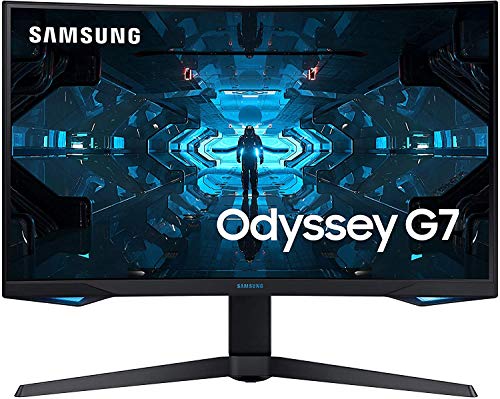
| Samsung Odyssey G7 | 1440p | 27” | VA | 2500:1 | 600 nits | 95.0% |
| Alienware AW2521H | 1080p | 24.5” | IPS | 1300:1 | 460 nits | Not advertised |
| Gigabyte M27Q | 1440p | 27” | IPS | 1000:1 | 350 nits | 92.0% |
| Asus VG279QM | 1080p | 27” | IPS | 1000:1 | 400 nits | 95.0% |
As mentioned, 1440p resolutions and 240Hz refresh rates are the sweet spot in the market that offers a good combination of performance and price.
But if you want best-in-class color performance, the LG 27GR95QE-B is the champ. Its OLED panel has a 1500000:1 contrast ratio, producing bright colors and perfect blacks. For comparison, IPS panels have a 1000:1 contrast ratio, most with lower DCI-P3 color coverage as well.
Gaming monitors with high peak brightness ratings display colors better than models with lower peak brightness ratings. This performance is noticeable in Fortnite’s colorful environments when comparing two monitors side-by-side with different brightness and Vesa DisplayHDR certifications.
The Asus ROG Swift PG27AQN, Alienware AW2723DF, and Samsung Odyssey G7 have the highest peak brightness ratings among our IPS and VA panel picks.
As expected, the BenQ Zowie XL2546K has the worst color performance of the models on this shortlist. The TN panel’s low peak brightness, contrast ratio, and color coverage explain why. This is not the gaming monitor to buy if you’re not an esports enthusiast.
Ergonomics
| Model | Height Adjustment (mm) | Tilt (deg.) | Swivel (deg.) | Pivot (deg.) |
|---|
| Asus PG27AQN | 100 | +20 to -5 | +25 to -25 | 0-90 (clockwise) |
| Alienware AW2723DF | 110 | +21 to -5 | +20 to -20 | 0-90 (both ways) |
| BenQ Zowie XL2546K | 155 | +20 to -5 | +45 to -45 | 0-90 (clockwise) |
| LG 27GR95QE-B | 110 | +15 to -5 | +10 to -10 | 0-90 (counter-clockwise) |
| Gigabyte M28U | 130 | +20 to -5 | None | None |
| Gigabyte M34WQ | 130 | +20 to -5 | +30 to -30 | None |
| Samsung Odyssey G7 | 120 | +15 to -5 | +15 to -15 | 0-90 (clockwise) |
| Alienware AW2521H | 130 | +21 to -5 | +20 to -20 | 0-90 (both ways) |
| Gigabyte M27Q | 130 | +20 to -5 | None | None |
| Asus VG279QM | 130 | +33 to -5 | +90 to -90 | 0-90 (both ways) |
All of the best Fortnite monitors offer stands with height adjustment and tilt functionality. The Gigabyte M28U and the Gigabyte M27Q are the only models that don’t include swivel and pivot ergonomics. The Gigabyte M34WQ doesn’t offer pivot functionality but does offer swivel functionality.
Otherwise, our Fortnite monitor picks include swivel and pivot functionality. These two ergonomic features aren’t critical for every setup, though the ergonomics can be useful for dual-monitor setups.
I/O and more
| Model | DisplayPort | HDMI | USB-A | USB-C | KVM Switch | Speakers |
|---|
| Asus PG27AQN | DP 1.4 (1) | 2.0 (3) | 2 | No | No | No |
| Alienware AW2723DF | DP 1.4 (1) | 2.0 (2) | 4 | No | No | No |
| BenQ Zowie XL2546K | DP 1.2 (1) | 2.0 (3) | None | No | No | No |
| LG 27GR95QE-B | DP 1.4 (1) | 2.1 (2) | 2 | No | No | No |
| Gigabyte M28U | DP 1.4 (1) | 2.1 (2) | 3 | Yes | Yes | Yes |
| Gigabyte M34WQ | DP 1.4 (1) | 2.0 (1) | 2 | Yes | Yes | Yes |
| Samsung Odyssey G7 | DP 1.4 (1) | 2.0 (1) | 2 | No | No | No |
| Alienware AW2521H | DP 1.4 (1) | 2.0 (2) | 4 | No | No | No |
| Gigabyte M27Q | DP 1.2 (1) | 2.0 (2) | 2 | Yes | Yes | No |
| Asus VG279QM | DP 1.2 (1) | 2.0 (2) | None | No | No | Yes |
With the exception of the BenQ Zowie XL2546K and the Asus VG279QM, all of our selections include a range of USB-A ports for your peripherals. We recommend buying a gaming monitor with as many USB-A ports as possible, especially for gamers with many peripherals.
The LG 27GR95QE-B and the Gigabyte M28U are the best options for PS5 and Xbox Series X gamers. Both include the required HDMI 2.1 ports needed to run each console at up to 4K resolution and 120 frames per second. But consider that the LG model doesn’t offer 4K resolution, albeit the OLED panel makes up for the lower 1440p resolution.
Buying a gaming monitor with a KVM switch can be convenient for multi-source setups, such as hooking up a console and PC or a PC and Mac to one monitor. A KVM switch allows you to seamlessly switch between two sources and continue using the same mouse and keyboard. Gigabyte’s M-Series monitors include KVM switches.