


Buying the best monitor for Apex Legends ensures that you have a competitive advantage for precision aiming and lightning-fast reactions, in addition to providing you with eye candy for an outstanding visual experience. But what gaming monitor should you buy? Our guide to the best Apex Legends monitors includes our best-in-class picks, covers essential buying tips, and discusses the monitors Apex Legends pros use to rack up wins.
What monitor brand is most popular with Apex Legends pros?
BenQ Zowie and Asus gaming monitors are the brands predominantly used by pro Apex Legends players. Each brand has excellent dedicated gaming monitors with outstanding performance. We include below a breakdown of monitor brands used by Apex Legends pros to further highlight the most popular monitors the best players use.
Best monitor for Apex Legends




Apex Legends monitor buying tips
Below, we provide some essential features to consider when buying the best gaming monitor for Apex Legends. These themes also hold for any fast-paced game and gaming in general.
Refresh rate
It’s best to buy the highest refresh rate gaming monitor your budget can support. This way, you have the competitive aiming advantage of reduced motion blur over gamers playing on lower refresh rate monitors.
240Hz is currently the sweet spot with the most options and the best performance for the price. If you’re buying a budget monitor for Apex Legends, aiming for at least 144Hz is best.
Resolution
Resolution doesn’t offer the same competitive advantages as your refresh rate, but it’s hard to ignore the benefits of jumping to 1440p or 4K resolutions. We suggest sticking to 1440p for most gamers, especially if you don’t have a powerful enough PC to churn out high frame rates to match your gaming monitor’s refresh rate. 1080p is almost unanimously the resolution chosen by esports athletes who prioritize the highest frame rates at all costs.
But most casual gamers, even those on a budget, can find a gaming monitor with a high refresh rate and 1440p resolution.
Panel type
IPS panels are the most popular display type for gaming monitors due to their well-balanced colors and performance for the price. You won’t get the highest contrast ratios that VA panels offer, which push out rich blacks and vibrant colors. But VA panels are primarily found in curved gaming monitors, so the options are limited.
TN panels are almost exclusively used by esports athletes that want the highest refresh rates and outstanding motion handling. But TN panels underperform all other panel types regarding image quality.
Lastly, OLED panels offer the best visuals with perfect blacks and rich colors. However, you’ll need to increase your budget since OLED gaming monitors are expensive for the equivalent performance of an IPS, VA, or TN panel.
Size
We suggest sticking to 27-inch gaming monitors if you have a dedicated display for gaming. 25-inch gaming monitors are good if you want to save money, but they are less immersive and have fewer options.
There are many outstanding ultrawide gaming monitors you can buy. Ultrawides are especially useful if you want an immersive gaming experience or have a single monitor for gaming and productivity.
Console compatibility
To run Apex Legends at the max frame rate of 120 at 4K resolution on a PS5 or Xbox Series X you’ll need an HDMI 2.1 port. PS5 and Xbox Series X consoles don’t use DisplayPort ports, which most PC gamers should use.
Be sure to check your gaming monitors ports to see if HDMI 2.1 is included if you game on console or both console and PC. Otherwise, HDMI 2.0 is common, and you’ll be limited to 240Hz at 1080p, 144Hz at 1440p, and 60 Hz at 4K.
Comparing the best Apex Legends monitors
Below, we compare our Apex Legends monitor picks side-by-side in several key areas for gaming performance.
Display
| Model | Resolution | Size | Panel | Contrast Ratio | Peak Brightness | DCI-P3 Coverage |
|---|---|---|---|---|---|---|
| Asus PG27AQN | 1440p | 27” | IPS | 1000:1 | 600 nits | 98.0% |
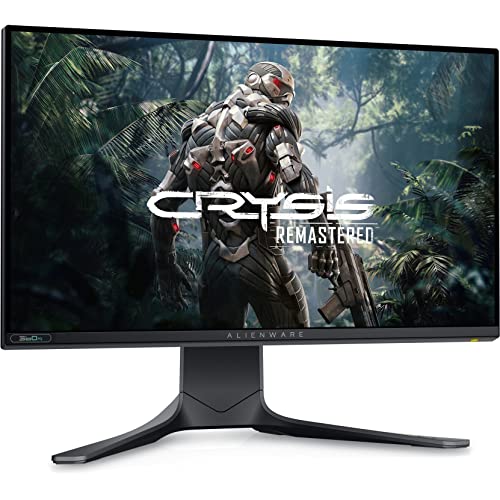
| Alienware AW2723DF | 1440p | 27” | IPS | 1000:1 | 600 nits | 95.0% |
| BenQ Zowie XL2546K | 1080p | 24.5” | TN | 1000:1 | 320 nits | Not advertised |
| LG 27GR95QE-B | 1440p | 27” | OLED | 1500000:1 | 1000 nits | 98.5% |
| Gigabyte M28U | 4K | 28” | IPS | 1000:1 | 300 nits | 94.0% |
| Gigabyte M34WQ | 1440p | 34” | IPS | 1000:1 | 400 nits | 91.0% |
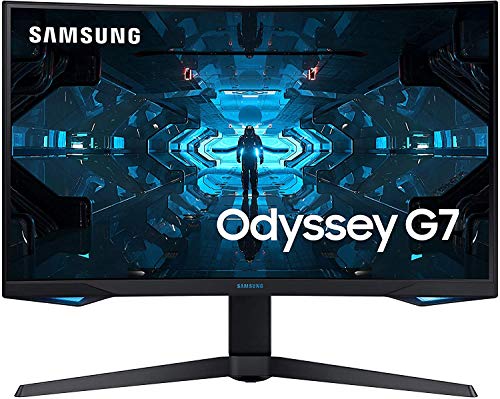
| Samsung Odyssey G7 | 1440p | 27” | VA | 2500:1 | 600 nits | 95.0% |
| Alienware AW2521H | 1080p | 24.5” | IPS | 1300:1 | 460 nits | Not advertised |
| Gigabyte M27Q | 1440p | 27” | IPS | 1000:1 | 350 nits | 92.0% |
| Asus VG279QM | 1080p | 27” | IPS | 1000:1 | 400 nits | 95.0% |
There are several gaming monitors to put on your shortlist if you’re looking for fast gaming performance and excellent image quality in one. The LG 27GR95QE-B is the clear standout with its rich OLED panel with a 1500000:1 contrast ratio and wide DCI-P3 color coverage. No pick on our list will compete with the image quality offered with this LG model.
Close behind, the Asus ROG Swift PG27AQN, Alienware AW2723DF, and Samsung Odyssey G7 have outstanding image and gaming performance. Their high peak brightness levels and wide color coverage result in a punchier image than you’ll get with competing models. Apex Legends and other vibrant games do impress on these gaming monitors.
The BenQ Zowie XL2546K is perhaps the single pick on our list to avoid if you’re focused on color performance. The TN panel in this display is not bright, and colors appear more muted than IPS, VA, and OLED displays.
Ergonomics
| Model | Height Adjustment (mm) | Tilt (deg.) | Swivel (deg.) | Pivot (deg.) |
|---|---|---|---|---|
| Asus PG27AQN | 100 | +20 to -5 | +25 to -25 | 0-90 (clockwise) |
| Alienware AW2723DF | 110 | +21 to -5 | +20 to -20 | 0-90 (both ways) |
| BenQ Zowie XL2546K | 155 | +20 to -5 | +45 to -45 | 0-90 (clockwise) |
| LG 27GR95QE-B | 110 | +15 to -5 | +10 to -10 | 0-90 (counter-clockwise) |
| Gigabyte M28U | 130 | +20 to -5 | None | None |
| Gigabyte M34WQ | 130 | +20 to -5 | +30 to -30 | None |
| Samsung Odyssey G7 | 120 | +15 to -5 | +15 to -15 | 0-90 (clockwise) |
| Alienware AW2521H | 130 | +21 to -5 | +20 to -20 | 0-90 (both ways) |
| Gigabyte M27Q | 130 | +20 to -5 | None | None |
| Asus VG279QM | 130 | +33 to -5 | +90 to -90 | 0-90 (both ways) |
Ergonomics are more or less important depending on the user and their setup. Generally, it’s best to go with the models with the most ergonomic functionalities. Your setup may evolve, and adding versatility can future-proof you against replacing your gaming monitor that doesn’t have the needed ergonomics.
All of our Apex Legends monitor picks include height adjustment and tilt functionality. Only the Gigabyte M28U and Gigabyte M27Q don’t include swivel and pivot functionality. All other models include both, except for the Gigabyte M34WQ, which has swivel but not pivot functionality.
Height adjustment and tilt ergonomics are the most useful for most single-monitor setups. In contrast, swivel and pivot functionality are most relevant for dual-monitor setups, especially if using one monitor vertically.
The BenQ Zowie XL2546K and Asus VG279QM stand out for two different reasons. The BenQ Zowie model has a wide range of adjustability in all areas, which esports athletes demand. The Asus model also has a wide range of adjustability, which most budget gaming monitors shun to keep costs down.
I/O and more
| Model | DisplayPort | HDMI | USB-A | USB-C | KVM Switch | Speakers |
|---|---|---|---|---|---|---|
| Asus PG27AQN | DP 1.4 (1) | 2.0 (3) | 2 | No | No | No |
| Alienware AW2723DF | DP 1.4 (1) | 2.0 (2) | 4 | No | No | No |
| BenQ Zowie XL2546K | DP 1.2 (1) | 2.0 (3) | None | No | No | No |
| LG 27GR95QE-B | DP 1.4 (1) | 2.1 (2) | 2 | No | No | No |
| Gigabyte M28U | DP 1.4 (1) | 2.1 (2) | 3 | Yes | Yes | Yes |
| Gigabyte M34WQ | DP 1.4 (1) | 2.0 (1) | 2 | Yes | Yes | Yes |
| Samsung Odyssey G7 | DP 1.4 (1) | 2.0 (1) | 2 | No | No | No |
| Alienware AW2521H | DP 1.4 (1) | 2.0 (2) | 4 | No | No | No |
| Gigabyte M27Q | DP 1.2 (1) | 2.0 (2) | 2 | Yes | Yes | No |
| Asus VG279QM | DP 1.2 (1) | 2.0 (2) | None | No | No | Yes |
Gamers tend to use many peripherals, which is why we suggest buying a gaming monitor with as many USB-A ports as possible. Only the BenQ Zowie XL2546K and Asus VG279QM don’t have USB-A ports.
All picks include DisplayPort connectivity that matches the monitor’s resolution and max refresh rate. But PS5 and X Box Series X gamers will want to look for models with HDMI 2.1 connectivity. This way, you can run games at the max of 4K and 120 frames per second.
The Gigabyte M28U and LG 27GR95QE-B are two picks for this scenario, as both include HDMI 2.1 ports. While the LG model isn’t capable of 4K, the OLED panel downscaled to 1440p still looks fantastic.
Only the Gigabyte M-series monitors include USB-C ports and KVM switches. A KVM switch is handy if you plug two sources into one gaming monitor. You can seamlessly switch between each source using the same keyboard and mouse. A KVM switch is most relevant if you run a hybrid PC and console or PC and Mac setup.


